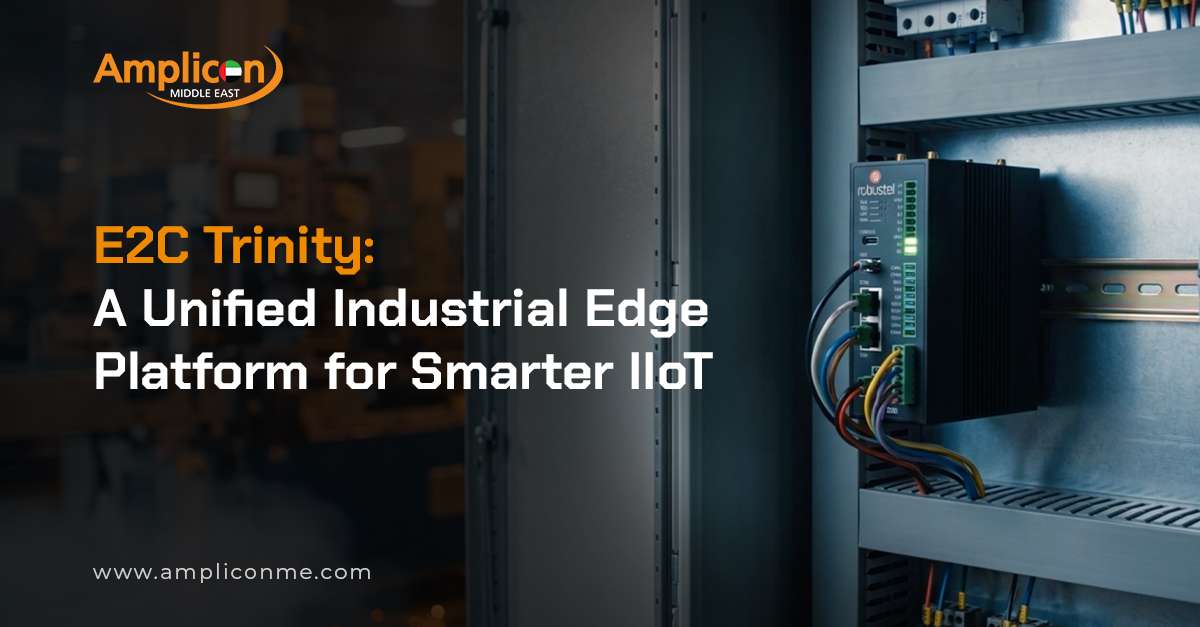
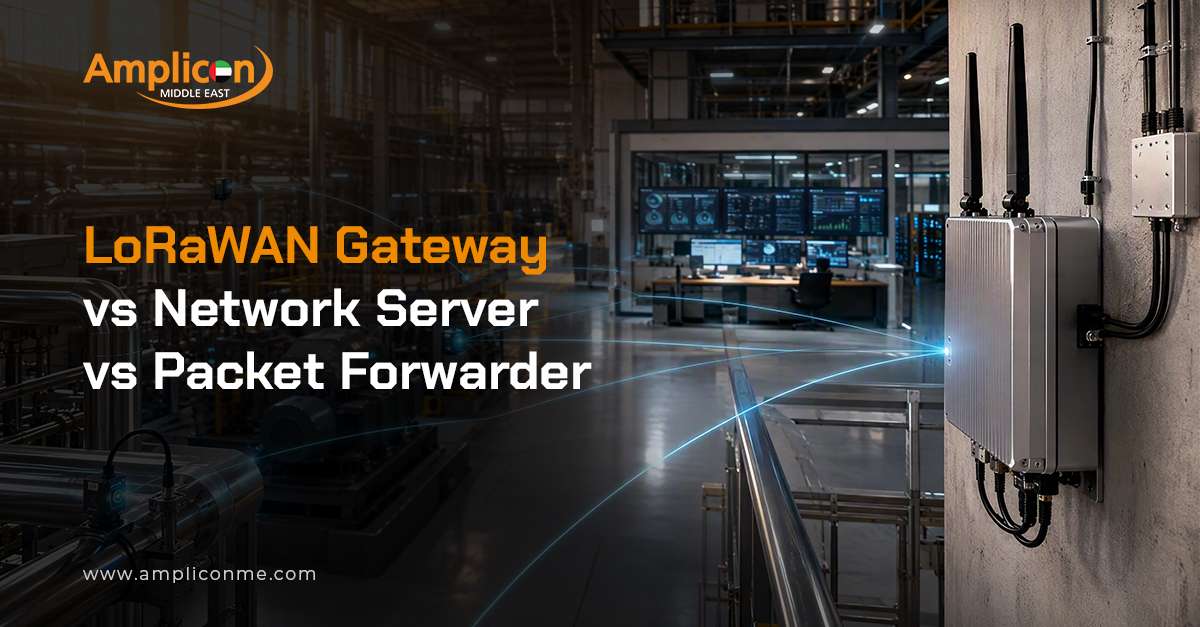
Robustel industrial routers are built for the moments when connectivity cannot fail — like critical SCADA systems at an offshore oil platform in the Arabian Gulf, where every minute offline costs thousands of dirhams. Reliable connectivity is mission-critical for system integrators deploying industrial routers and IoT infrastructure across the UAE, Saudi Arabia and the wider Middle East.
The GCC presents a connectivity challenge unlike almost anywhere else on earth. Industrial sites in Saudi Arabia’s Empty Quarter sit more than 1,000 kilometres from the nearest major city, exposed to ambient temperatures that swing from near-freezing at night to above 50°C in summer.
Offshore platforms in UAE waters face salt spray, humidity, and the constant vibration of marine operations. Construction megaprojects in NEOM or Riyadh’s Diriyah Gate span thousands of hectares with no fixed infrastructure. Smart city installations across Dubai and Abu Dhabi require real-time data from thousands of distributed sensors, cameras, and edge devices simultaneously.
Across all of these scenarios, the common thread is that connectivity hardware that fails in the environment or fails to support the industrial protocols that OT infrastructure depends on creates operational, safety, and financial exposure that cannot be tolerated.
In this article, we will cover five critical industrial connectivity solutions including SCADA and PLC remote monitoring, smart city traffic management, utility metering, elevator emergency communications, and temporary site connectivity and show how Robustel’s industrial router and gateway portfolio addresses each one.
For system integrators, industrial project managers, and smart city planners working across the UAE, Saudi Arabia, Qatar, Bahrain, Kuwait, and Oman, we hope this will act as a practical decision guide.
1. Remote SCADA Monitoring for Oil & Gas Operations in the UAE and Saudi Arabia with Robustel Industrial routers
Oil and gas operations across the Arabian Gulf and Arabian Peninsula generate continuous streams of critical data like wellhead pressure, flow rates, tank levels, pipeline integrity parameters, separator performance from assets spread across some of the most remote and inaccessible terrain on the planet.
Getting that data reliably to central operations centres in Riyadh, Abu Dhabi, or Dubai, in real time and without interruption, is the core challenge of oil and gas SCADA connectivity in the region.
SCADA Connectivity Solutions Issues in the Middle East
Remote RTUs and PLCs at wellheads, gathering stations, and injection sites in Saudi Arabia’s Empty Quarter or the UAE’s offshore fields may be hundreds of kilometres from the nearest city infrastructure. Single-carrier cellular connections are insufficient for operations where a dropped SCADA feed can require an emergency site visit that costs tens of thousands of riyals. Legacy serial field instruments communicate in Modbus RTU which is a protocol that IP routers without built-in protocol support simply cannot handle.
The Robustel Industrial Routers Solution
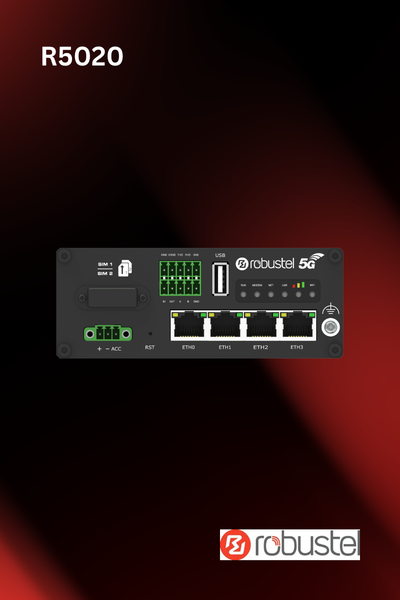
The Robustel R3000 and R5020 are configured as industrial VPN routers with built-in Modbus TCP/RTU gateway functionality, making them the right choice for oil and gas SCADA connectivity across the Middle East.
- Dual SIM Failover: Critical for redundancy, the router can switch between Etisalat and du (UAE) or stc and Mobily (Saudi Arabia) if one carrier’s signal drops.
- Protocol Support: Built-in Modbus TCP/RTU gateway functionality allows the router to speak directly to legacy PLCs. It also supports DNP3 and IEC 104, ensuring compatibility with modern power and gas grids.
- Desert-Ready Hardware: With an operating temperature range of -40°C to +75°C, these routers thrive in unconditioned outdoor enclosures.

If you want to see the real-world impact, check out our case study at Amplicon where we recently deployed 150+ Robustel routers across offshore platforms for a UAE-based system integrator, achieving 99.8% uptime for their wellhead pressure and flow rate monitoring systems.
2. Smart City Traffic Management & Monitoring with Robustel Industrial Routers
Dubai’s RTA already runs one of the smartest transport networks on the planet, but they aren’t slowing down. They’ve just kicked off the design phase for their next big Intelligent Traffic Systems expansion. The goal is to bring their tech coverage from 60% up to the full 100% of the city’s main roads by the end 2026. This means the system will grow to cover 710km of road, up from the current 480km with Robustel Industrial Routers.
Riyadh’s NEOM project and the broader Saudi Vision 2030 smart city programme are replicating that ambition at national scale. Both require real-time connectivity for thousands of distributed city devices like speed enforcement cameras, adaptive traffic signal controllers, environmental sensors, smart parking systems, and licence plate recognition units exchanging data continuously with centralised traffic management platforms.
Smart City Connectivity Solutions Problems in the UAE and Middle East
The connectivity architecture of a smart city traffic management network must simultaneously handle high-bandwidth video uplinks from HD cameras, low-latency command and control signals for adaptive traffic signals, and aggregated IoT sensor data from dozens of devices per intersection all over a cellular network that must remain reliable through dense urban radio environments, peak traffic periods, and the physical demands of roadside installation.
The Solution: Robustel R5030 5G Router
The Robustel R5030 5G industrial router is the purpose-built solution for smart city traffic connectivity in the UAE and Saudi Arabia. Support for 5G SA and NSA across the major GCC networks provides the bandwidth headroom that HD video uplinks demand.
- Edge Computing: Using the Robustel SDK, integrators can run local AI analytics for license plate recognition (ANPR) or incident detection. This reduces cellular data costs by up to 60% by only sending event data to the cloud.
- MQTT Support: Ideal for lightweight communication between thousands of IoT sensors and the city’s command center.
- Ultra-Low Latency: Sub-50ms latency ensures that traffic management decisions such as signal priority for emergency vehicles happen in real-time.
3. Water & Utility Metering In the GCC (AMI/AMR Systems)
Saudi Arabia’s Water Security National Transformation Programme and the UAE’s Water Security Strategy 2036 both set ambitious targets for reduced consumption and improved network efficiency.
The operational foundation of both programmes is the ability to remotely read, monitor, and manage water and electricity meters at scale from dense urban apartment blocks in Dubai to sprawling agricultural districts in Saudi Arabia’s Al-Qassim region.
The Challenge
DEWA, ADDC, SEC, and other GCC utility operators face the challenge of connecting millions of meters where many uses legacy RS485 Modbus communication interfaces to central AMI platforms over cellular networks that must be low-power enough for battery-operated deployments, secure enough to protect sensitive consumption data, and reliable enough to support the 15-minute reading intervals that demand response and leak detection programmes require.
The Robustel Solution
The Robustel R3000 Industrial Dual-SIM 4G/LTE Router is designed for AMI, AMR, and industrial remote connectivity applications. It provides secure and reliable 4G LTE communications for smart meters, RTUs, PLCs, and SCADA systems.
- Dual-SIM failover for uninterrupted connectivity
- RS232/RS485 serial interfaces for Modbus RTU devices
- Serial-to-IP communication over cellular networks
- AES encryption and VPN support for secure data transfer
- Low power consumption for remote and solar-powered sites
- Rugged industrial design for harsh environments
4. Industrial Elevator Emergency Communication
Dubai Marina alone has more than 400 residential towers, each with between five and fifteen elevators. Riyadh’s King Abdullah Financial District, Doha’s Lusail City, and Abu Dhabi’s Al Reem Island add thousands more. Every one of those elevators requires a certified emergency communication system which is a legal requirement under UAE Civil Defence regulations, Saudi Building Code, and international EN 81-28 standards for remote alarm devices in lifts.
Elevator Emergency Communication Challenges in the UAE
Traditional elevator emergency communication systems relied on dedicated PSTN telephone lines which is an infrastructure that is being decommissioned across the GCC as operators migrate to VoIP and IP-based communications.
The replacement must deliver two-way voice communication from the elevator cabin to a 24/7 monitoring centre, with automatic location identification, call recording for regulatory compliance, and a redundancy architecture that ensures the system remains operational even when a single network connection fails.
The Robustel Solution
The Robustel EV8100 elevator voice gateway is purpose-engineered for this application. A built-in voice gateway eliminates the need for a separate PBX system, dramatically simplifying installation and reducing equipment cost.
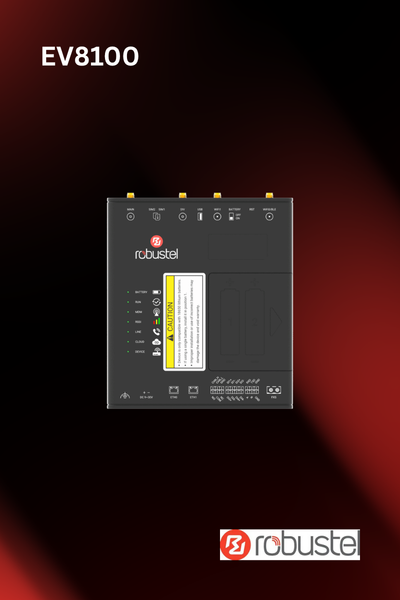
Dual SIM LTE connectivity provides redundancy across two carriers if the primary network fails, the EV8100 automatically switches to the secondary, maintaining the emergency communication capability that regulations require.
- Two-Way Voice: Features a built-in voice gateway to route emergency calls to monitoring centers without needing a separate PBX.
- Regulatory Compliance: Fully supports the EN81-28 standard and meets regional Civil Defense requirements.
- Battery Backup: Integrated power management ensures the communication link remains active even during building-wide power failures.
5. Remote Site & Temporary Installation Connectivity
The scale of construction activity across the GCC is without parallel. NEOM, Red Sea Project, Diriyah Gate, EXPO City Dubai, and the dozens of industrial cities, logistics parks, and mixed-use developments under construction simultaneously across the region all require connectivity infrastructure that can be deployed at speed, relocated as the project evolves, and managed remotely without dedicated on-site IT staff.
Construction Site Connectivity Issues in the GCC
Construction site connectivity has traditionally required days of configuration work per site which is a constraint that becomes operationally intolerable. Security monitoring, equipment telematics, worker safety tracking, and site management systems all need network connectivity from day one of site activation. And when the project moves or completes, the connectivity infrastructure must move with it.
The Robustel Solution
The Robustel R5020 and R5030 support zero-touch provisioning and can be shipped to site pre-configured, requiring only physical installation and SIM insertion before they connect to the network and check in with the RCMS management platform for final configuration. A site that would previously require two to three days of engineer time for router setup can be operational within 30 minutes.
- RCMS Management: Using Robustel’s Cloud Manager Service (RCMS), engineers can pre-configure 200+ routers and ship them to the site. Once powered on, they automatically pull their configuration.
- Rapid Deployment: A NEOM project contractor recently deployed hundreds of routers for site CCTV and worker safety tracking in just 3 weeks—a process that would traditionally take months.
Also Read: How Amplicon helped deploy over 200 Robustel routers across a distributed construction zone in under three weeks
Comparison Table: Choosing the Right Robustel Router in UAE
Use this table as a quick reference when selecting Robustel hardware for GCC industrial connectivity projects:
| Solution | Robustel Device | Key Capabilities | GCC Use Case |
| SCADA Oil & Gas | R3000, R5020 | Dual SIM failover, IPsec VPN, Modbus TCP/RTU, DNP3, IEC 104, -40°C to +75°C | Remote wellheads, offshore platforms, pipeline monitoring |
| Smart City Traffic | R5030 (5G) | 5G SA/NSA, edge computing, MQTT, multiple Ethernet, sub-50ms latency | Traffic cameras, adaptive signals, ITS sensors, smart parking |
| Utility Metering (AMI/AMR) | R3000 Industrial Dual-SIM 4G/LTE Router | Dual-SIM failover, RS232/RS485 serial connectivity, Modbus RTU/TCP, VPN & AES encryption, low power consumption, rugged industrial design | DEWA, SEC, ADDC, water & electricity AMI |
| Elevator Emergency | EV8100 | Built-in voice gateway, dual SIM LTE, battery backup, GPS, EN 81-28 | High-rise residential & commercial, GCC Civil Defence compliance |
| Construction / Temp Sites | R5020, R5030 | Zero-touch provisioning, dual SIM, IP30, RCMS remote mgmt, redeployable | Megaproject sites, NEOM, event installations, oil rig deployments |
How to Choose the Right Robustel Solution: A Decision Framework
When specifying industrial connectivity hardware for GCC projects, here’s the four criteria to help drive your selection:
Protocol requirements. If your field devices speak Modbus RTU, DNP3, or IEC 60870-5-104, you need a device with built-in protocol gateway functionality, not a standard router. The R3000 and R5020 provide this natively.
Environmental conditions. For outdoor, desert, and industrial environments in the GCC, -40°C to +75°C operating range and appropriate IP rating are non-negotiable. All Robustel industrial routers meet this baseline.
Connectivity architecture. If 5G bandwidth is required for video-heavy applications (smart city cameras, high-frequency SCADA), the R5030 is the correct device. For standard 4G LTE SCADA and telematics, the R5020 or R3000 provides the right performance at lower cost.
Management scale. Deployments beyond 20 to 30 sites should be managed through RCMS to make configuration, firmware updates, and fault diagnosis operationally scalable without proportional growth in engineering headcount.
Conclusion: Industrial Connectivity That Works Where It Has to
Selecting an industrial router for Middle East projects requires a balance of protocol requirements, environmental durability, and scalability. Whether you are managing 10 remote sites or 1,000, the unifying factor should be a centralized management platform like Robustel RCMS, which provides visibility across your entire fleet.
Amplicon Middle East is the regional partner for Robustel industrial connectivity solutions across the GCC providing local stock, technical support, and project consultation for deployments of any scale. Whether you are specifying a 10-site SCADA network or a 1,000-node smart city infrastructure, our team is ready to help you build it right.
Request a Free Technical Consultation with Amplicon Middle East Today
FAQ: Industrial IoT gateway and OPC-UA Connectivity Solutions in the Middle East
How do I connect a PLC or RTU to a SCADA system remotely in the UAE or Saudi Arabia?
The most reliable approach for remote PLC and RTU connectivity to SCADA in the Middle East is a dual-SIM industrial cellular router with built-in Modbus TCP/RTU gateway functionality and pre-configured VPN tunnel. The Robustel R3000 or R5020 installed at the field device connects via RS485 to the RTU, converts Modbus RTU to Modbus TCP over IP, and transmits via IPsec VPN over cellular to the central SCADA server.
What is the best industrial router for oil and gas SCADA in the Middle East?
For oil and gas remote monitoring in the GCC, the Robustel R5020 is the most widely specified solution. It combines dual-SIM LTE failover, built-in Modbus and DNP3 protocol gateway, IPsec/OpenVPN, an operating temperature range of -40°C to +75°C for desert and marine environments, and RCMS cloud management.
How does dual SIM failover work in Robustel industrial routers?
Robustel’s dual SIM routers maintain an active connection on the primary SIM and continuously monitor its connectivity status. If the primary connection fails due to carrier outage, signal loss, or network congestion, the router automatically switches to the secondary SIM within seconds, maintaining the data link without operator intervention.
What industrial protocols do Robustel routers support?
Robustel industrial routers and gateways support a broad range of OT and industrial communication protocols natively, including Modbus RTU and Modbus TCP, DNP3, IEC 60870-5-104, MQTT, OPC-UA (via the R5030 edge computing platform), and serial-to-IP conversion for RS232/RS485 legacy field devices.
Can Robustel routers be managed remotely across a large GCC deployment?
Yes. Robustel’s RCMS cloud management platform provides centralised visibility and control across deployments of any scale. RCMS enables remote configuration, firmware updates, connection status monitoring, alert management, and VPN control without on-site visits.
Are Robustel industrial routers compliant with GCC regulatory and operator standards?
Robustel industrial routers are designed to meet the cybersecurity and technical standards required by major GCC energy operators and government infrastructure clients. VPN encryption meets the IPsec and data security requirements commonly specified in Saudi Aramco and ADNOC cybersecurity frameworks.