C4ISR or Command, Control, Communications, Computers, Intelligence, Surveillance, and Reconnaissance is the integrated architecture through which modern security organisations coordinate personnel, sensor feeds, unmanned systems, and decision-making across distributed field positions.
Getac’s CommandCore Ground Control Station and rugged computing platforms provide the hardware layer for deploying C4ISR capability in the extreme environments and high-EMI conditions common across the MENA region, with open integration architecture that connects to both new unmanned systems and legacy defence communications infrastructure.
The Expanding Role of UAVs in Regional Security and Border Monitoring in the MIddle East
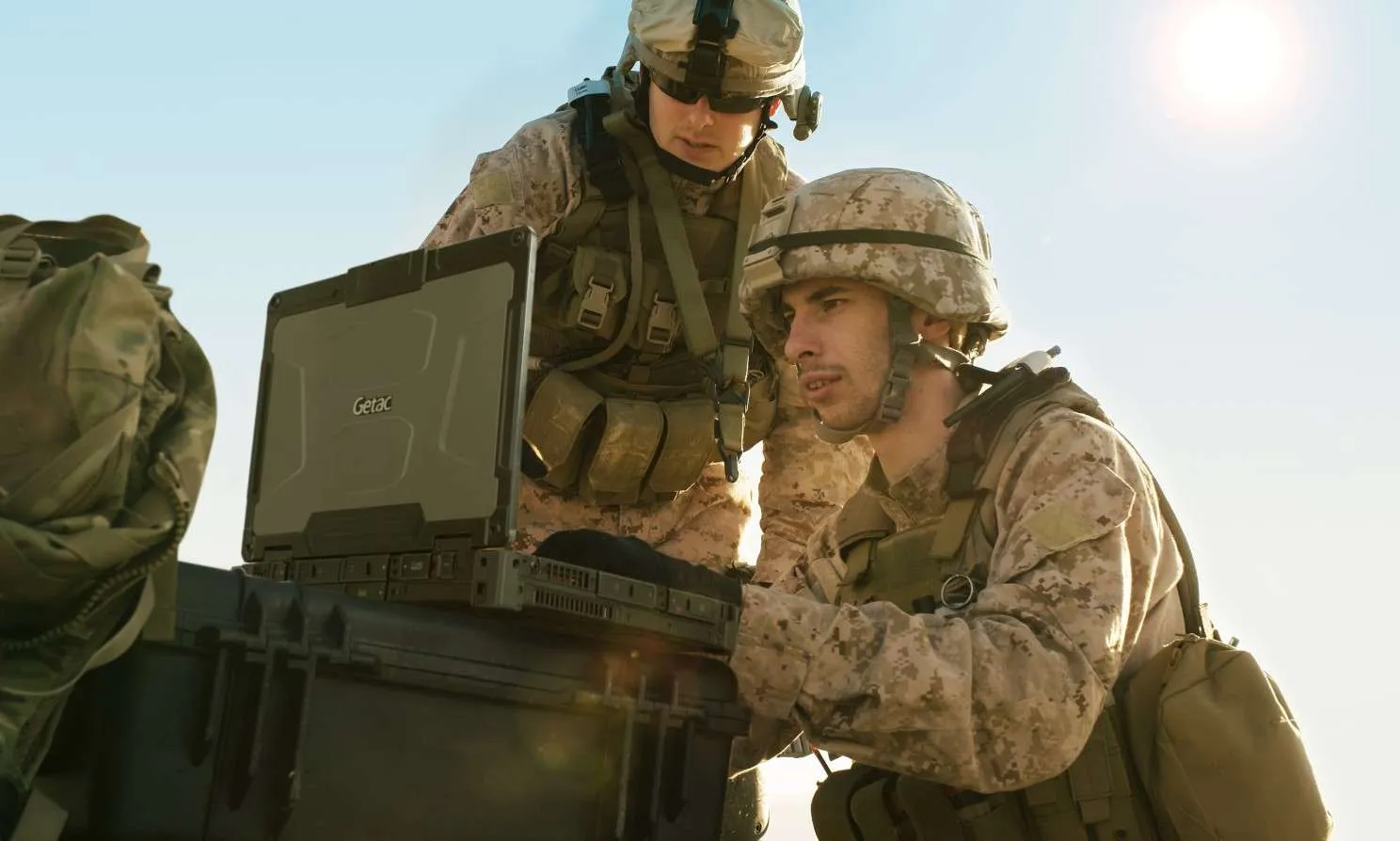
Unmanned Aerial Vehicles (UAVs) have fundamentally altered regional security dynamics in the Middle East. Drones provide persistent, high-altitude surveillance, thermal imaging of porous borders, and rapid reconnaissance over inhospitable desert terrain. However, an advanced UAV is entirely dependent on the reliability of its command link.
Operating these assets securely requires a highly resilient UAV ground control station (GCS). Mobile field teams cannot rely on fragile consumer electronics to pilot multi-million-dollar assets. Built on ultra-rugged computing platforms, Getac’s CommandCore solutions provide the processing power and physical durability required for seamless unmanned vehicle control.
Key features of a ruggedized GCS include:
- High-Luminance Displays: Ensuring operators can clearly view complex topography and live 4K thermal feeds in blinding, direct desert sunlight.
- Zero-Latency Processing: Using dedicated GPU acceleration to process incoming telemetry and execute flight commands instantly.
- Environmental Survivability: Enclosures sealed against fine sand ingress (IP66) and engineered to withstand extreme thermal loads without throttling, ensuring the drone is never left flying blind due to a localized computer failure.
Improving Defense Situational Awareness Through C4ISR Integration
Data is only valuable if it can be understood and acted upon immediately. True defense situational awareness relies on the ability to fuse localized UAV feeds with wider intelligence networks.
A critical challenge for modern command centers is interoperability. Defense agencies frequently operate a mix of cutting-edge IP-based sensors alongside legacy radio and radar systems. High-performance C4ISR integrations act as the vital bridge, normalizing disparate data streams into a single, unified Common Operating Picture (COP).
Rugged edge servers and mobile workstations deployed in forward operating bases enable commanders to:
- Ingest real-time multi-sensor data (UAVs, ground sensors, satellite imagery).
- Execute AI-driven threat detection algorithms locally.
- Securely disseminate actionable intelligence to dismounted patrol units, ensuring that both the command center and the frontline operate from the exact same data.
C4ISR Integration: Mapping the Full Capability Stack
C4ISR describes not a single device but an architecture of a layered system of capabilities that must work together to produce effective command and situational awareness. The following table maps each layer of C4ISR to its operational function, the Getac platform that addresses it, and the key technical requirement:
| C4ISR Layer | Operational Function | Getac Platform | Key Technical Requirement |
| Command (C2) | Decision-making and tasking based on fused operational picture | Getac X600/X600 Server; forward C2 workstation | High-performance processing; dual-display output; secure data storage |
| Control | Directing unmanned assets, monitoring sensor feeds, managing allocation of response resources | Getac CommandCore GCS; unmanned system ground control | Real-time low-latency link; ruggedised controller inputs; multi-UAV management |
| Communications | Secure voice, data, and video across distributed positions | B360 with LTE/satellite module; X600 with integrated comms | Encrypted end-to-end; TEMPEST-ready chassis option; multi-band radio support |
| Computer/Processing | ISR data fusion, AI-assisted pattern recognition, logistics and asset tracking | X600 with NVIDIA GPU; X600 Server for forward compute node | AI-capable GPU; MIL-STD-810H; EMI-shielded chassis |
| Intelligence (I) | Collection, processing, exploitation, and dissemination of reconnaissance data | Getac X600/CommandCore with sensor integration | High-bandwidth data handling; multi-feed display; secure storage |
| Surveillance (S) | Persistent monitoring of areas of interest via UAV or fixed sensor feeds | CommandCore GCS + Getac rugged tablet as secondary display / control node | Multi-UAV simultaneous management; geo-referenced video overlay |
| Reconnaissance (R) | Tasked collection operations for specific intelligence requirements | CommandCore GCS; mission planning and asset direction | Waypoint programming; encrypted telemetry link; real-time video relay |
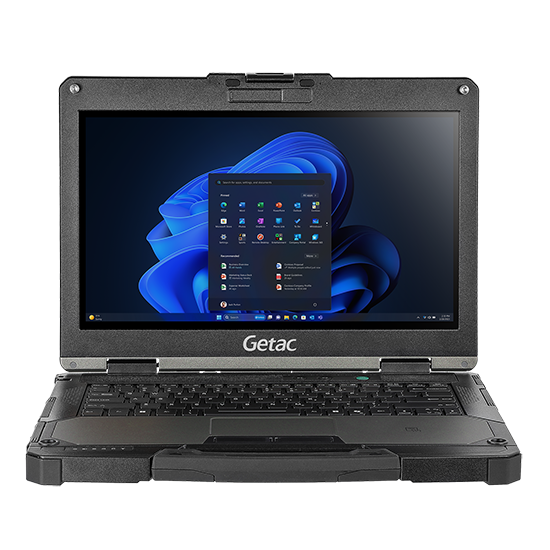
In practice, a forward security command post integrating these capabilities would deploy the Getac X600 or X600 Server as the primary processing and C2 workstation, CommandCore as the UAV management and surveillance monitoring station, and Getac B360 laptops or rugged tablets as the mobile elements connecting field personnel to the common operating picture. All elements share encrypted data links and present a unified operational picture.
The Necessity of TEMPEST Certified Tablets
Every electronic device naturally emits electromagnetic radiation. Sophisticated adversaries can intercept these compromising emanations to reconstruct keystrokes, intercept display feeds, or capture unencrypted data streams from a distance which is a technique known as Van Eck phreaking.
To neutralize this threat, tactical edge hardware must adhere to strict TEMPEST (Telecommunications Electronics Material Protected from Emanating Spurious Transmissions) standards.
Deploying TEMPEST certified tablets and laptops guarantees that the physical chassis and internal circuitry are meticulously shielded. This electromagnetic armor ensures that classified UAV telemetry, troop movement coordinates, and C4ISR communications cannot be electronically eavesdropped, even in highly contested environments.
Also Read: Unyielding Performance: Securing the Tactical Edge with Getac X600 and B360 in Extreme Environments (add link)
Operational Scenarios of C4ISR Computing Solutions & UAV Ground Control Stations
Border Perimeter Monitoring with UAV-GCS Integration
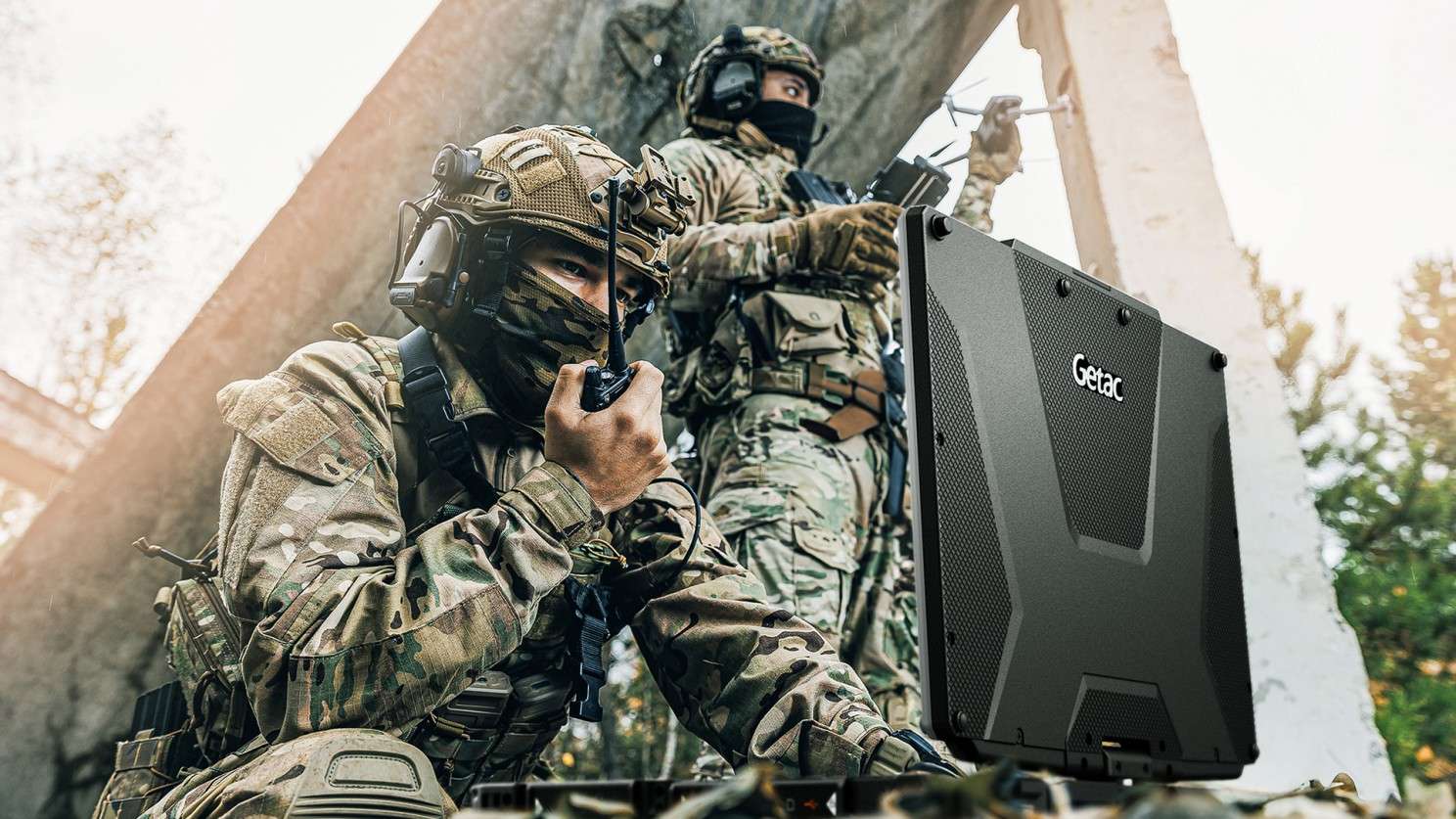
During border patrols, Getac CommandCore GCS manages multiple UAVs on pre-programmed routes. The system displays real-time tactical maps, streams EO/IR sensor feeds, and alerts operators to motion or threshold breaches. Upon detection, operators can redirect specific UAVs while maintaining perimeter coverage, pushing track data via encrypted CoT links directly to field personnel on ATAK-equipped Getac devices, all from a single position.
Critical Infrastructure Surveillance: Energy & Water
High-consequence energy and water assets across the GCC region require persistent situational awareness. A C4ISR architecture integrates fixed cameras, perimeter sensors, and periodic UAV surveys to trigger proactive security responses. Using the Getac X600 Server, forward operators can process and correlate multiple sensor feeds locally, maintaining an event log without relying on a centralized data center.
Coastal & Maritime Perimeter Awareness
MENA coastal security relies on fusing data from land-based radar, AIS vessel tracking, and UAV sensors into a unified operational picture. The field-deployable Getac X600 runs multi-source fusion software paired with CommandCore, delivering this integrated capability inside coastal stations or vehicle-mounted patrol units.
The Military System Integrators Challenge: Bridging Generations Without Gaps
The practical challenge in deploying new C4ISR computing hardware alongside legacy systems is protocol translation which is the ability to ingest data formatted for older communication standards and present it within modern situational awareness interfaces.
The Getac X600’s high-performance processing architecture, combined with external interface hardware where required, provides the computational resource to run protocol translation middleware alongside the primary C2 application without performance degradation in either function.
For military system integrators responsible for deploying and maintaining Middle Eastern defence communications networks, the Getac X600’s Windows 11 Pro foundation provides full compatibility with the bespoke integration software that bridges legacy and modern systems, software that often requires x86 architecture and is incompatible with proprietary military hardware platforms.
Partnering with Amplicon Middle East for C4ISR & UAV Control Solutions
As a trusted engineering partner in the GCC, Amplicon Middle East bridges the gap between hardware manufacturers and defense end-users. We design and deliver bespoke command and control solutions from integrating TEMPEST-certified Getac platforms into mobile tactical vehicles to engineering secure, multi-protocol networks for centralized command centers. We ensure that your software, unmanned assets, and field personnel are seamlessly and securely connected.
To learn more about outfitting your defense operations with advanced C4ISR and UAV control solutions, contact our engineering team today.
FAQ
What is C4ISR in the military?
C4ISR is an acronym standing for Command, Control, Communications, Computers, Intelligence, Surveillance, and Reconnaissance. It serves as the military’s main system integrating data from sensors, databases, and worldwide intelligence feeds to build a real-time operational picture, empowering commanders to make faster, more informed tactical decisions.
What are C4ISR computing solutions?
C4ISR computing solutions refer to the integrated hardware like rugged servers and tablets and software networks that collect, process, and distribute intelligence data, providing military commanders with a comprehensive, real-time view of the battlefield or border sector.
What is the Getac CommandCore?
The Getac CommandCore is a ruggedised ground control station designed for secure command, monitoring, and control of unmanned and remote systems. It supports fixed-wing and multi-rotor UAVs, unmanned ground vehicles, and remotely operated infrastructure sensors.
What unmanned systems does Getac CommandCore support?
Getac CommandCore’s open API architecture allows integration with third-party UAV management software and is designed for alignment with STANAG 4586, the NATO interoperability standard for UAV control systems, enabling management of mixed-vendor unmanned fleets from a single platform.
Why are TEMPEST certified tablets necessary for defense?
Electronic devices emit electromagnetic signals that can be intercepted by adversaries to steal data. TEMPEST certified tablets are rigorously engineered with specialized shielding to block these compromising emanations. This ensures that sensitive information, such as troop locations or C4ISR data, remains secure against electronic eavesdropping.
How can military system integrators improve border security?
Military system integrators take individual technologies such as UAVs, legacy radar systems, rugged computers, and encrypted radios and engineer them to work together flawlessly. By eliminating data silos and ensuring secure interoperability, integrators provide border security forces with a unified, real-time operational picture that enables faster, more accurate decision-making.