Industrial IoT is evolving beyond simply connecting machines to a network. Manufacturers and infrastructure operators increasingly need to collect data from existing equipment, process it efficiently and integrate it with operational and enterprise systems.
The challenge is that many industrial environments already contain valuable infrastructure, including PLCs, machines, SCADA systems, sensors and production platforms. Replacing these systems is not always practical or necessary.
E2C Trinity from Robustel takes a different approach by bringing connectivity, edge computing and operational software together through a unified Industrial Edge platform. The platform is designed to help organizations modernize existing infrastructure, integrate operational technology with business systems and make greater use of the data they already collect.
Industrial IoT Has a Data Integration Problem
Industrial environments can contain a mixture of new and legacy technologies. A production line might include established PLCs and machines alongside newer Industrial IoT devices, cloud applications and enterprise software.
Connecting these components is often more complicated than installing additional hardware. Operational data needs to move between machines, networks, edge systems and applications.
Organizations also need to determine where data should be processed and how it can be presented to the people and systems that need it. This creates a gap between industrial connectivity and actual operational value.
Simply connecting a machine does not automatically make its data useful. Businesses need an architecture that can collect information, process it closer to the source when appropriate and integrate it with existing operational systems.
That is the problem E2C Trinity is designed to address.
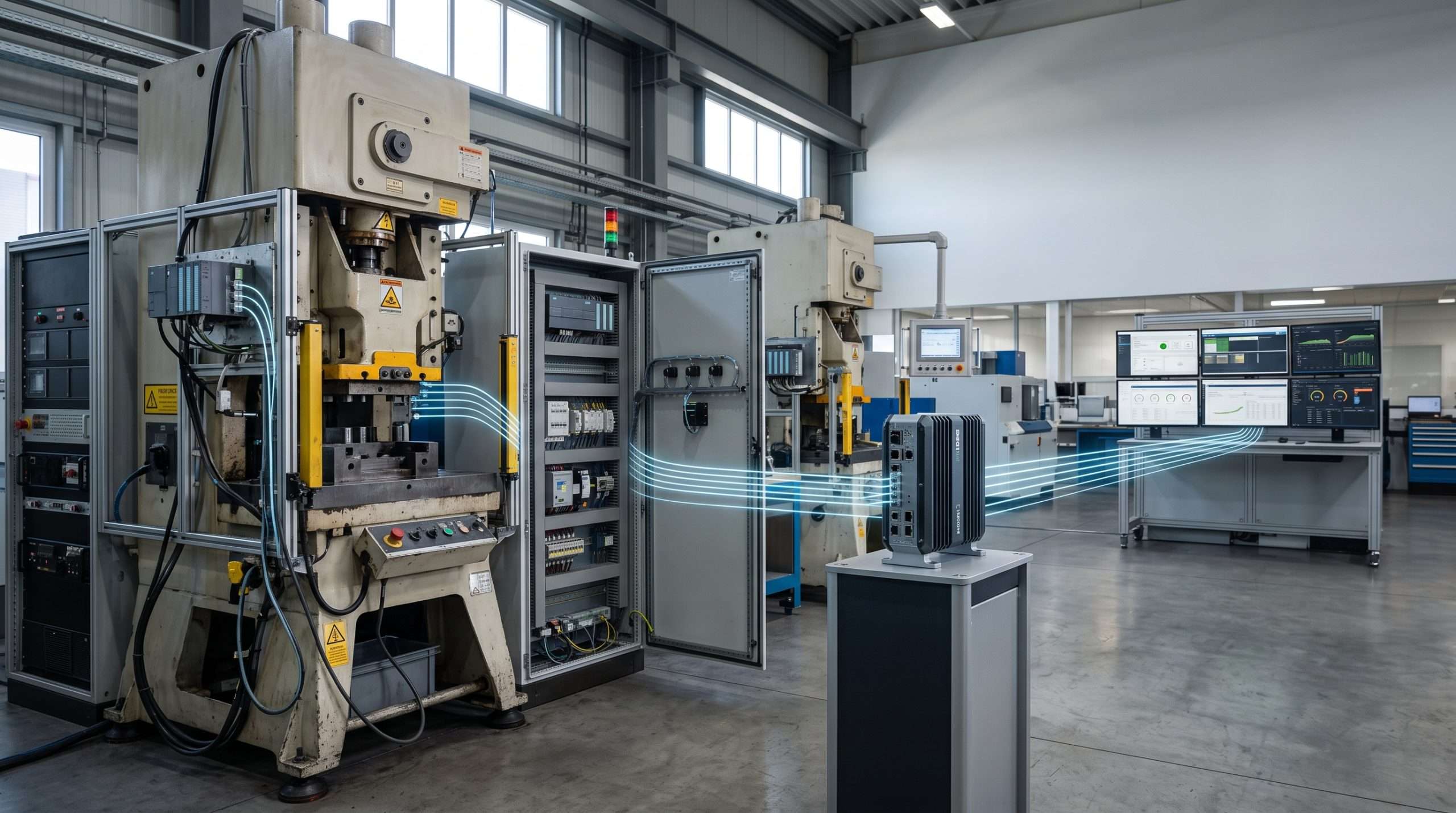
Why Replacing Existing Industrial Infrastructure Isn’t Always the Answer
When faced with digital transformation demands, industrial enterprises are frequently told that their existing infrastructure is outdated. Yet, replacing core machinery or control systems carries massive risks like:
High Capital Expenditure: Industrial machinery and PLCs are long-term investments built to operate reliably for decades. Replacing functional hardware requires significant capital outlay.
Unacceptable Operational Downtime: Halting a production line or power utility network to install new machinery leads to immediate revenue loss and operational disruption.
Proven Reliability: Legacy PLCs and deterministic industrial networks excel at what they were designed to do which is real-time process control. Replacing them with unproven systems introduces operational risk.
Untapped Operational Value: Legacy equipment contains decades of operational data. The assets themselves aren’t the problem; the lack of modern data extraction and edge processing capability is.
Organizations do not need to replace their proven assets to join the IIoT revolution. What they need is a non-disruptive modernization layer that extracts, filters, and standardizes data from legacy equipment protecting capital investments while unlocking modern industrial edge computing capabilities.
E2C Trinity is positioned around this principle. It can help businesses move toward modern Industrial IoT architectures while continuing to use existing PLCs, machines and production systems.
Also Read: Gateway, LNS or Packet Forwarder? LoRaWAN Terms Explained
Introducing E2C Trinity
E2C Trinity is Robustel’s Industrial Edge platform designed to help organisations modernise existing infrastructure, integrate operational technology with business systems, and unlock more value from the data they already collect.
It brings together three elements that are typically managed separately:
Connectivity
Industrial devices and distributed infrastructure need dependable ways to communicate with other systems. Connectivity provides the foundation for collecting data from operational environments.
Edge Computing
Processing data closer to where it is generated can provide a practical way to handle industrial information within the operational environment.
Operational Software
Data becomes more valuable when it can be integrated into applications and systems used for monitoring, analysis and operational decision-making.
Together, these elements create a path from physical industrial assets to usable operational information.
The supplied E2C Trinity material describes the platform as a way to combine connectivity, edge computing and operational software into a single solution, helping organizations simplify data collection, system integration and operational visibility.
From Connectivity to Operational Intelligence
Simply connecting a machine to a network does not make an organisation smarter. A connected machine that produces data nobody can access, in a format nothing can read, integrated into no system, is operationally equivalent to an unconnected one. The value of Industrial IoT lies in the chain of steps between data generation and business decision.
The value of an Industrial Edge architecture can be understood as a progression:
Industrial asset → Connectivity → Edge processing → Data integration → Application → Operational value
Consider a manufacturing machine.
The machine generates operational information through its existing control and automation systems. Connectivity provides a way to bring that information into the wider digital environment. Edge computing can process the data close to the machine, while operational software can help make the resulting information useful for monitoring and other applications.
This is different from treating connectivity as the final objective.
The goal is to create a more practical connection between operational technology and the systems that need access to industrial data.
E2C Factory: Modernizing Existing Automation
E2C Factory is the manufacturing-focused component of the E2C Trinity offering.
Its purpose is to help manufacturers bridge the gap between legacy automation and modern Industrial IoT without replacing existing PLCs, machines or production systems. This can be particularly relevant for factories that want to improve data visibility while continuing to operate established production infrastructure.
What E2C Factory Enables
Factory monitoring: real-time visibility into production line status, machine states, and operational performance without requiring new automation hardware
Machine data collection: structured capture of production data from existing PLCs and machines, normalised for use in higher-level applications
Production visibility: OEE (Overall Equipment Effectiveness) monitoring, downtime tracking, and production rate analysis using data already generated by existing equipment
Industrial data integration: connecting operational data to SCADA, enterprise systems, and cloud platforms without restructuring existing automation
Legacy automation modernisation: adding IIoT capabilities to existing production systems as an overlay layer, protecting investment in proven automation assets
Compatible Hardware
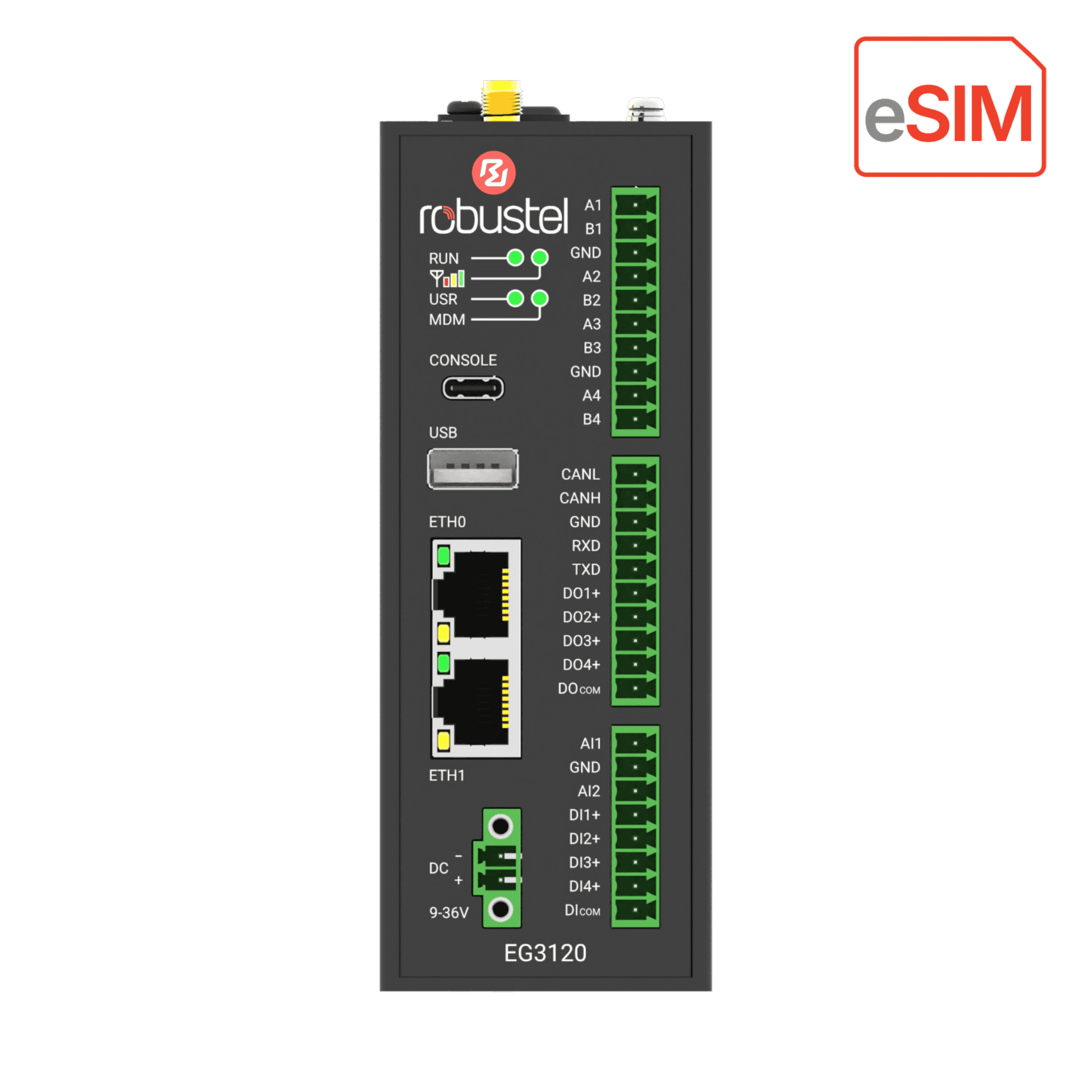
E2C Factory is compatible with the following Robustel hardware platforms, available through Amplicon Middle East:
EG3120e: Industrial edge computing gateway with cellular connectivity and local processing capability
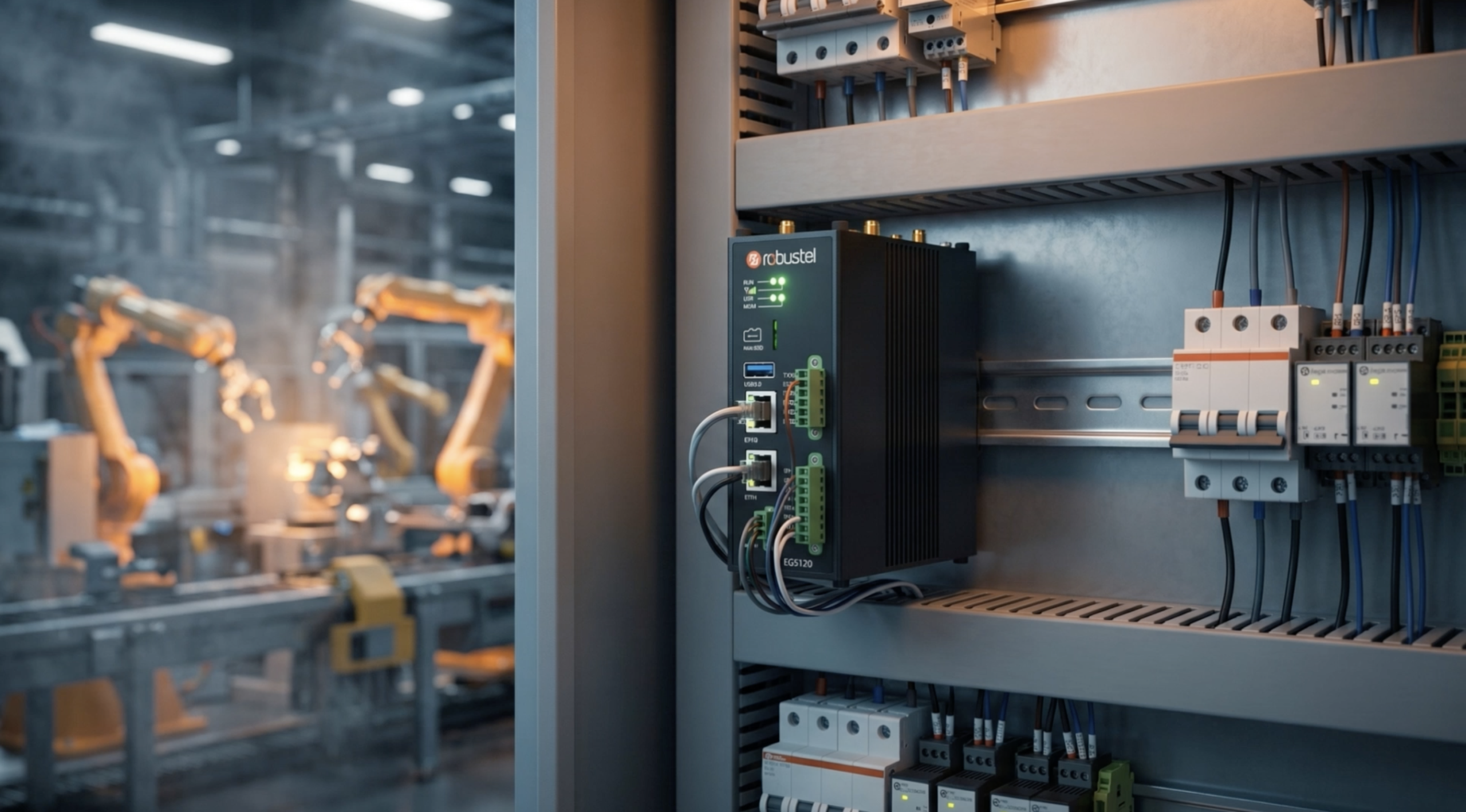
EG5120: Advanced edge gateway with expanded I/O and higher compute capacity for more demanding factory applications
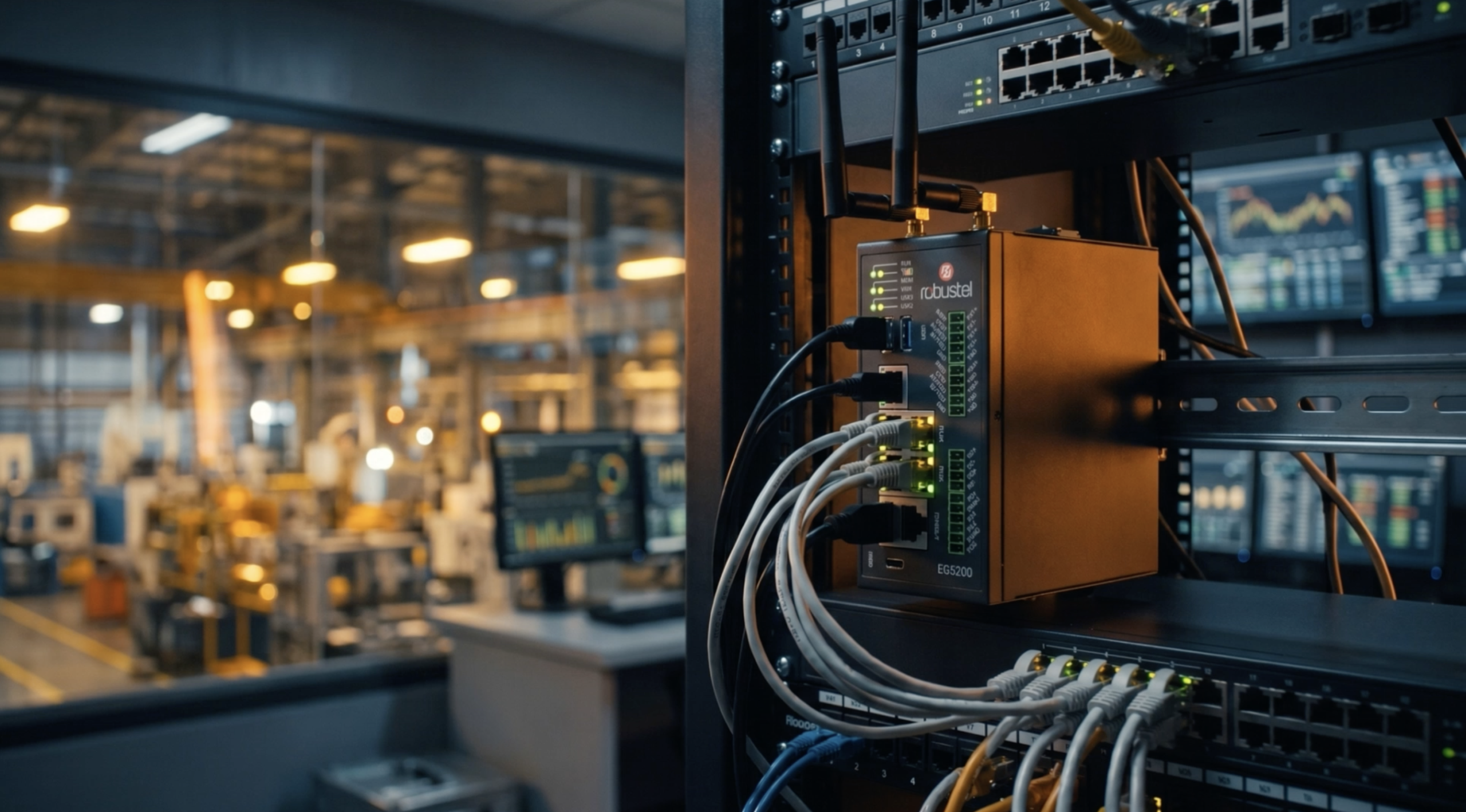
EG5200: High-performance edge gateway for complex multi-machine data integration and intensive local processing tasks
E2C Field: Connecting Distributed Infrastructure
E2C Field is the distributed infrastructure application within E2C Trinity. Where E2C Factory focuses on a single facility, E2C Field addresses the connectivity and integration challenges of assets that are geographically spread like pumping stations, substations, remote environmental monitoring points, agricultural water networks, smart city infrastructure, and utility distribution assets.
LoRaWAN + Industrial Connectivity + Edge Computing
The defining characteristic of E2C Field is its combination of LoRaWAN sensor connectivity with industrial-grade cellular backhaul and local edge processing. This three-layer approach addresses the specific challenges of distributed field deployments:
LoRaWAN provides long-range, low-power wireless connectivity for field sensors and remote devices collecting data from assets that are too distributed or power-constrained for wired or cellular connections at every endpoint.
Industrial cellular connectivity provides backhaul from the field to operations centres or cloud platforms, with dual SIM redundancy and cellular failover for reliability in remote locations.
Edge computing processes field data locally, applying alarm thresholds, normalising sensor readings, managing protocol translation, and reducing the volume of data that needs to be transmitted over cellular backhaul.
Applications for E2C Field
Utility distribution networks: Remote meter reading, substation monitoring, distribution asset management.
Energy infrastructure: Renewable energy site monitoring, pipeline and tank level sensing, remote asset health.
Smart city infrastructure: Environmental sensing, flood monitoring, smart lighting, parking systems.
Remote industrial operations: Unmanned site monitoring, wellhead and pump station telemetry.
Agriculture: Soil monitoring, irrigation control, water resource management across distributed land.
Compatible Hardware
E2C Field is compatible with:
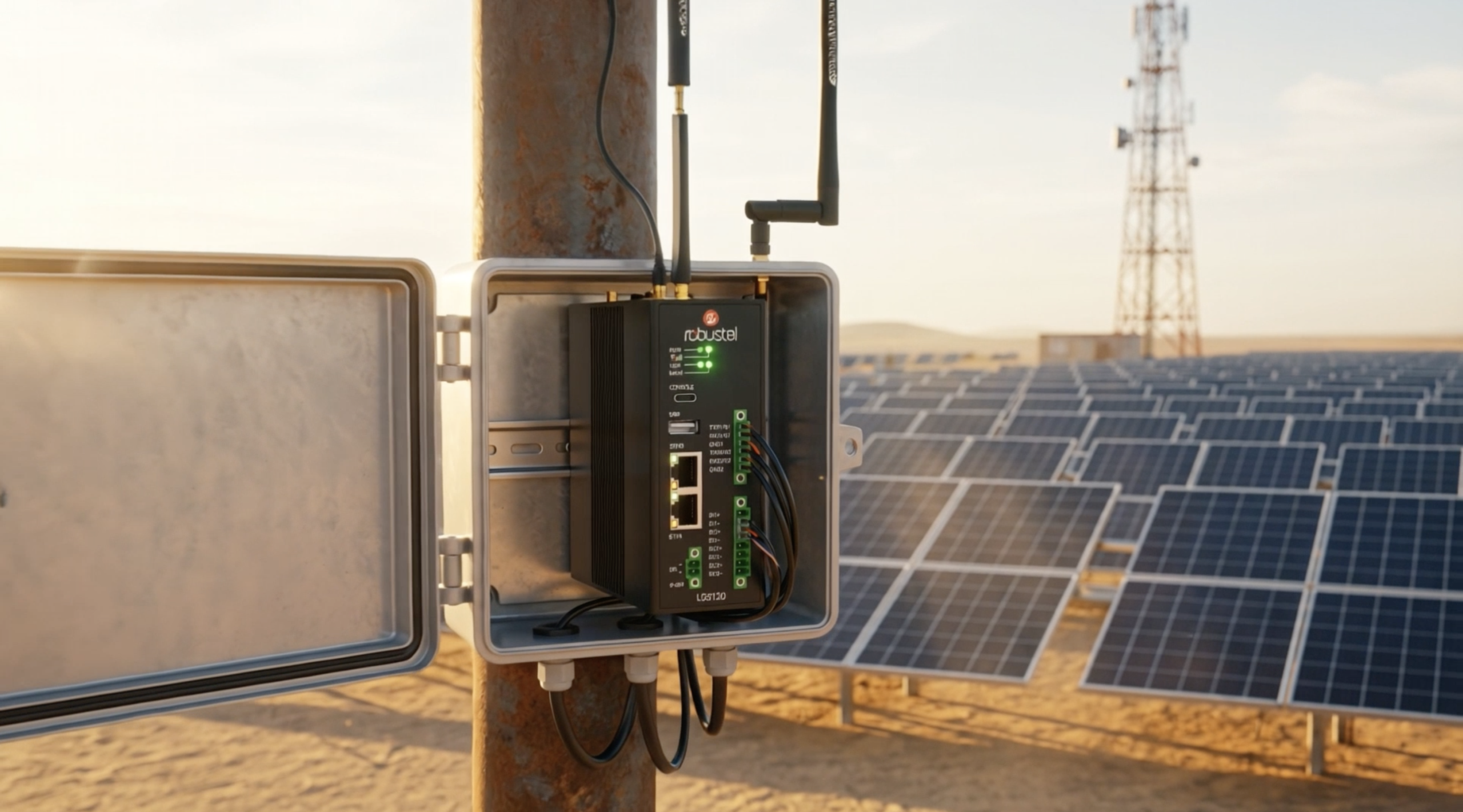
LG3120e: Robustel’s LoRaWAN edge gateway combining cellular connectivity, an embedded LoRaWAN network server, and local edge computing in a single industrial device. Available through Amplicon Middle East.
Why Edge Computing Matters in the Middle East
Industrial edge computing solves a set of challenges that are particularly pronounced in the UAE and GCC. Several structural characteristics of the region’s industrial landscape make the edge layer not just useful but often necessary.
Distributed Infrastructure Across Large Geographies
The GCC’s industrial and utility infrastructure is spread across vast distances like oil and gas assets in remote desert locations, water distribution networks serving dispersed communities, agricultural operations across large land holdings, and renewable energy sites far from major urban centres.
Sending every sensor reading to a central cloud platform over cellular connections is expensive, bandwidth-intensive, and introduces latency that can be avoided by processing data at the edge.
Utility and Energy Asset Management
DEWA, EWEC, and utility operators across Saudi Arabia, Qatar, and Oman operate thousands of field assets across geographically distributed networks.
Edge computing at the substation, pumping station, or remote monitoring point level enables local alarm handling, protocol normalisation, and data aggregation reducing the volume and complexity of data that needs to traverse cellular backhaul networks to reach operational centres.
Smart Building and Facility Operations
The UAE’s commercial real estate stock concentrated in Dubai, Abu Dhabi, and the wider GCC represents one of the highest densities of large commercial buildings in the world.
E2C Trinity’s approach of adding an edge layer to existing BMS and building automation infrastructure, rather than requiring full replacement, is directly applicable to the retrofit challenge described in the LoRaWAN smart buildings context. Building operators can add monitoring, sub-metering, and analytics capability without interrupting occupied operations.
Also Read: LoRaWAN Gateway Explained: How It Works & What It’s For
E2C Trinity and Existing SCADA and IIoT Systems
A common concern among system integrators and OT teams is whether a new IIoT platform will disrupt or attempt to replace their existing SCADA or enterprise software. E2C Trinity is engineered for open integration. It is designed to complement existing industrial investments, not replace them. Features include:
Complementing SCADA: E2C Trinity offloads non-critical data polling and edge processing tasks from legacy SCADA servers, allowing SCADA systems to focus strictly on real-time operational control.
Streamlining Cloud Data Movement: By pre-processing data at the edge, E2C Trinity delivers clean, structured JSON payloads directly to enterprise IoT platforms and cloud databases.
Flexible OT/IT Coexistence: Provides standard interfaces for modern applications while maintaining safe, read-only isolation for legacy PLCs and machinery.
E2C Trinity positions itself as the edge layer between the operational environment and these existing platforms collecting, processing, and normalising data from industrial assets, and making it available to the systems above in a form they can use.
Building a Scalable Industrial IoT Architecture
One of the consistent problems with Industrial IoT deployments assembled from separate point solutions is architectural complexity. A separate connectivity layer, a separate edge processing platform, a separate data integration tool, and a separate operational application multiply the number of systems to configure, maintain, troubleshoot, and keep secure. Each interface between systems is a potential failure point and an integration cost.
E2C Trinity’s unified platform approach reduces this complexity by consolidating the connectivity, edge processing, and operational software layers into a single managed environment. The simplified architecture from asset to application looks like this:
Industrial assets → Robustel connectivity → E2C Trinity → Edge processing → SCADA, IIoT and enterprise applications
This model provides a way to approach digital transformation incrementally.
Organizations can focus on connecting the assets that provide the greatest operational value, processing relevant data at the edge and integrating it with the systems already used across the business.
For manufacturers, infrastructure operators and system integrators, this can simplify the path from industrial connectivity to broader Industrial IoT capabilities.
Why Choose Amplicon Middle East for Industrial Edge Solutions?
Implementing an industrial edge architecture requires more than off-the-shelf hardware; it demands deep domain expertise in industrial networking, OT protocols, and regional operational environments.
As a trusted Robustel distribution partner and solution provider across the UAE and Middle East, Amplicon Middle East offers comprehensive support for Robustel E2C Trinity deployments:
- Industrial Networking Expertise: Decades of experience in OT-IT integration, serial-to-Ethernet conversion, and wireless field networking.
- Robustel Authorized Partner: Direct access to Robustel’s complete hardware portfolio.
- System Architecture & Integration Consulting: Hands-on assistance with network design, edge protocol selection, and cloud integration.
- Dedicated Regional Support: On-the-ground engineering advice, proof-of-concept testing, and post-deployment service throughout the UAE, Saudi Arabia, and the GCC.
FAQ: E2C Trinity in the Middle East
What is industrial edge computing?
Industrial edge computing involves processing and managing data closer to where it is generated in an operational environment. It can help connect industrial assets with applications while reducing reliance on centralized processing for every operation.
What is E2C Trinity?
E2C Trinity is Robustel’s Industrial Edge platform that combines connectivity, edge computing and operational software into a unified solution for industrial and infrastructure applications.
What is E2C Factory?
E2C Factory is designed for manufacturers looking to modernize existing automation and connect legacy PLCs, machines and production systems with modern Industrial IoT capabilities.
What is E2C Field?
E2C Field is designed for geographically distributed infrastructure and combines LoRaWAN, industrial connectivity and edge computing. Its target environments include utilities, energy, smart infrastructure and remote operations.
Can E2C Trinity work with existing industrial equipment?
The supplied material positions E2C Trinity specifically around modernizing existing infrastructure and complementing existing SCADA, Industrial IoT and enterprise systems rather than replacing proven assets.
How can edge computing support Industrial IoT?
Edge computing can provide a local layer for processing and integrating data generated by industrial equipment. This can help organizations connect operational assets with applications and broader business systems.
Can E2C Trinity complement existing SCADA systems?
Yes. It works as complementary to existing SCADA, Industrial IoT and enterprise platforms.
Looking to modernise existing industrial infrastructure without replacing proven assets?
Whether you are connecting factory machinery, distributed field infrastructure, or both, our engineering team can help you design the right approach for your operational environment and select the compatible Robustel hardware to deploy it.