Modern smart buildings in the UAE rely on IoT routers and gateways to connect HVAC, access control, energy metering, lighting, and security systems into a unified management platform. The right IoT router provides protocol translation between legacy building systems and modern IP networks, cellular failover when primary internet connectivity fails, hardware VPN for cybersecurity compliance, and cloud-based remote management all from a single DIN-rail-mounted device that fits inside a standard electrical enclosure.
For BMS engineers and facilities managers specifying connectivity for UAE smart building projects, understanding what separates a fit-for-purpose IoT router from a generic networking device is the difference between a resilient building automation network and one that fails silently.
What Does an IoT Router Do in a Smart Building?

Modern commercial towers and residential complexes across Dubai, Abu Dhabi, and the wider GCC are highly connected networks. Historically, building services operated in isolated silos. Air conditioning, lighting controls, security cameras, and electrical sub-meters were managed by entirely separate proprietary networks.
An industrial building automation router deployments rely on acts as the central communication hub. It performs four essential operational functions:
Bridges Legacy and Modern Networks: A primary challenge in building management systems is protocol fragmentation. An IoT gateway translates physical RS485 or Ethernet signals running legacy protocols like BACnet MS/TP or Modbus RTU into cloud-compatible formats like MQTT, JSON, or OPC-UA.
Enables Cloud and Edge Connectivity: Rather than hosting massive on-premise servers, smart building consultants are shifting BMS dashboards to secure cloud environments. The router acts as the secure outbound channel, pushing telemetry to platforms like AWS, Microsoft Azure, or specialized BMS software.
Guarantees Network Redundancy: Standard commercial fiber lines fail occasionally. If a primary internet line drops, smart building engineers specify instantly switches to cellular backup, preventing loss of historical energy or environmental telemetry.
Facilitates Secure Remote Engineering: Instead of dispatching a technician to site for a simple HVAC controller adjustment, a secure router establishes an encrypted virtual tunnel, allowing system integrators to perform remote diagnostics safely.
Key Features to Look for in a Smart Building IoT Router in the UAE
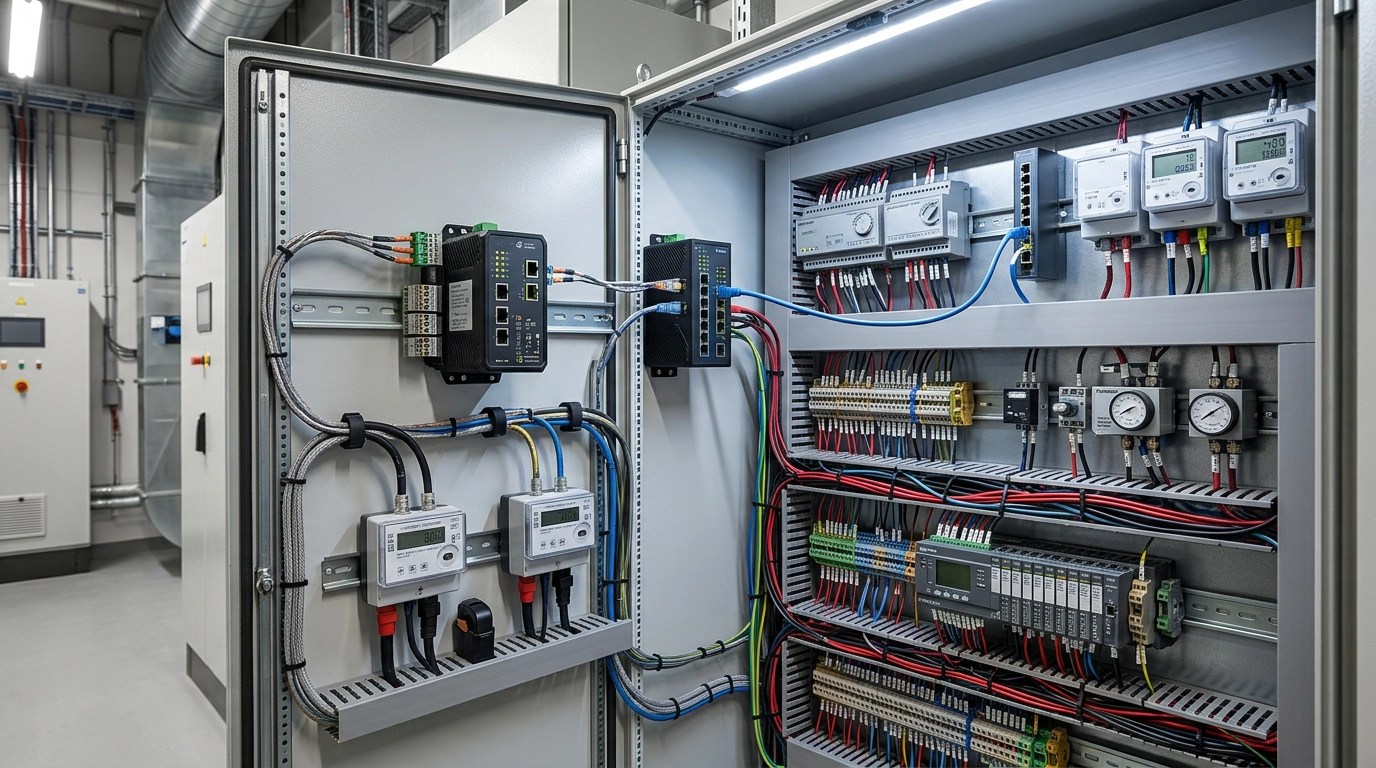
When specifying hardware for MEP (Mechanical, Electrical, and Plumbing) rooms or rooftop communications enclosures in the GCC, standard commercial IT routers will fail. Engineers must look for the following criteria:
Multi-Protocol and Interoperability Support
A viable smart building router must function as a Modbus BACnet gateway which operators can use to aggregate data from multiple sub-systems. It should feature physical RS232/RS485 serial ports alongside standard RJ45 Ethernet ports to bridge physical serial lines with modern IP-based building networks (BACnet/IP or Modbus TCP).
Dual-SIM Cellular Failover
Redundancy is critical for green building compliance. The router must feature dual-SIM slots, allowing it to hold SIM cards from both Etisalat and du. If one carrier’s local tower experiences a service outage, the router executes an automated failover within seconds to maintain persistent data streams.
Strict Cybersecurity Compliance
BMS networks are increasingly targeted by cyber threats. A secure IoT gateway smart building in the GCC must deploy support enterprise-grade security protocols, including IPsec, OpenVPN, L2TP, and stateful firewalls. It should also comply with the UAE’s National Cyber Security Strategy guidelines, ensuring that remote administration is fully encrypted.
Remote Device Management and Zero-Touch Provisioning
Zero-touch provisioning (ZTP) allows a new router to power on, connect to a management platform, and pull its complete configuration automatically without a technician visiting the site to configure it manually. Robustel’s RobustLink Device Management Platform and HMS’s Talk2M cloud both provide centralised fleet management, configuration push, and remote diagnostic capabilities for deployed devices across the UAE and GCC.
Wide Thermal and Environmental Resilience
While MEP rooms are theoretically air-conditioned, temperature control in mechanical shafts, lift-motor rooms, and rooftop enclosures often fails. Surface temperatures inside localized enclosures can exceed +60°C in the UAE summer. The chosen hardware must carry an operating certification from -20°C to +70°C.
Recommended IoT Router and Gateway Solutions for UAE Smart Buildings
Robustel R-Series Industrial Cellular Routers
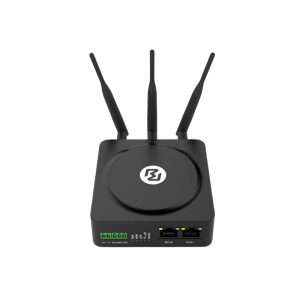
Robustel provides incredibly dependable cellular gateways that are ideal for smart building networks. The Robustel R1510 and R1520 series are highly compact, feature robust serial-to-IP capabilities, and offer dual-SIM LTE connectivity, making them the preferred choice for remote utility and sub-metering setups.
HMS eWON Secure Remote Access

For deeper system integration and secure troubleshooting, the HMS eWON Flexy is the market leader. An HMS industrial remote access gateway allows BMS programmers to securely tunnel directly into PLCs and digital controllers to modify logic without requiring on-site presence.
Amplicon Middle East distributes the following solutions for smart building IoT connectivity, all available with local UAE stock and engineering support:
| Solution | Form Factor | Best For | Key Feature | UAE Use Case |
| Robustel R3000 | DIN-rail router | Cellular backhaul, VPN, dual-SIM failover | Dual-SIM LTE, OpenVPN/IPsec, SDK | BMS WAN failover, remote HVAC sites |
| Robustel R5020 5G | DIN-rail 5G router | 5G-connected smart buildings, high-bandwidth BMS | 5G SA/NSA, LTE fallback, VPN | Expo City, Grade A smart offices |
| HMS eWON Cosy+ | Compact gateway | Secure remote access for BMS engineers | VPN tunnel, audit log, Talk2M cloud | Remote BMS diagnostics, FM teams |
| HMS Flexy 205 | Modular gateway | Multi-protocol legacy BMS integration | BACnet, Modbus, MQTT, OPC-UA | BACnet-to-MQTT bridging, metering |
Smart Building Applications in the UAE
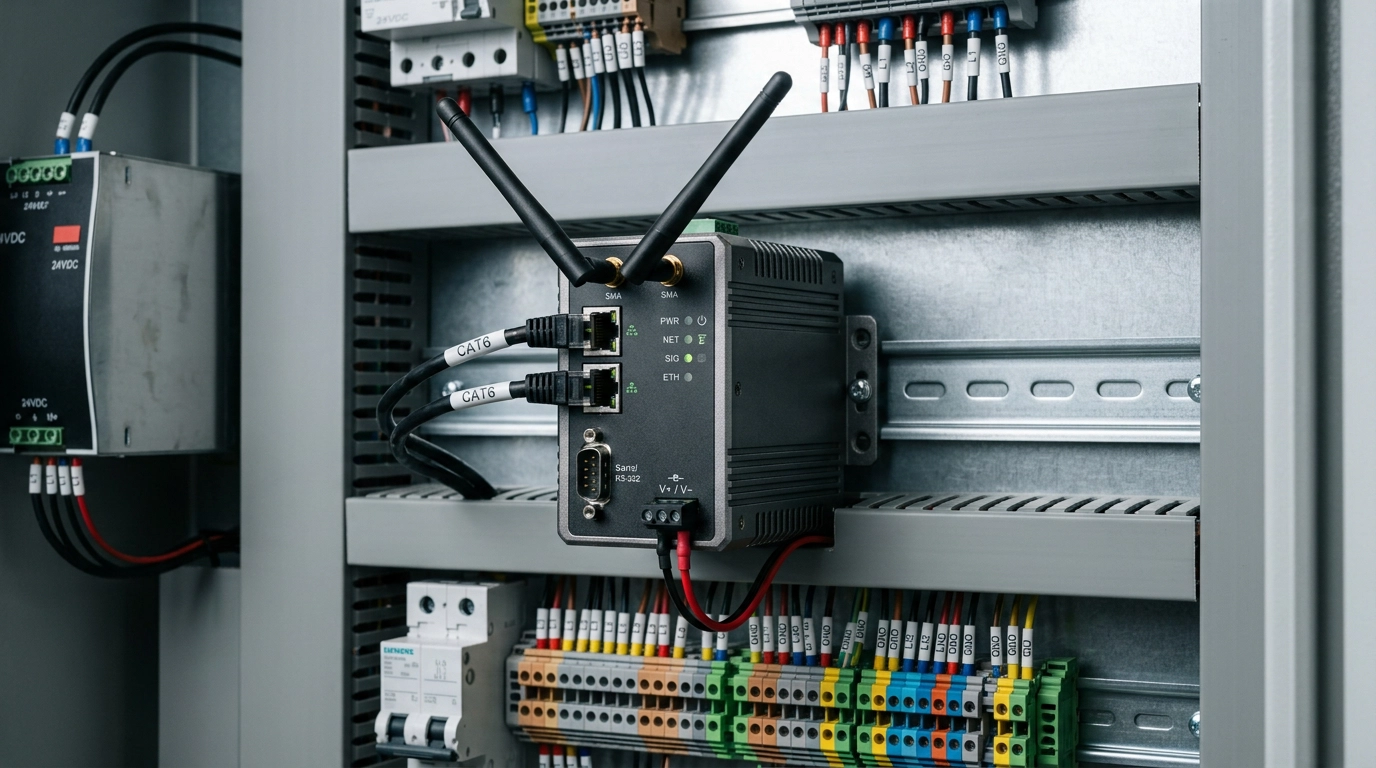
The deployment of rugged industrial IoT routers is transforming facilities management across major UAE real estate and national infrastructure projects such as:
DEWA Energy Management & Sub-Metering: Integrating smart water and electrical meters across high-rise towers requires secure, localized data collection. Routers aggregate M-Bus or Modbus meter readings and send them directly to DEWA or private billing portals.
HVAC Remote Monitoring and Optimization: Air conditioning accounts for up to 70% of a UAE building’s energy consumption. By pulling chiller and Air Handling Unit (AHU) telemetry through a local gateway, facilities managers run predictive maintenance algorithms to clean filters and adjust cooling loads before systems overheat.
Access Control and CCTV Backhaul: Providing redundant internet lines for parking gate barriers, automated visitor registration kiosks, and security systems to ensure facility security remains online during a primary network failure.
Tenant Experience & ESG Compliance: Green building initiatives such as LEED or Estidama require buildings to report real-time energy efficiency and indoor air quality metrics. IoT routers collect data from particulates and CO2 sensors to automate ventilation adjustments.
FAQ: Best IoT Router Solutions for Smart Building Management
What protocols do smart building IoT routers support?
Industrial smart building IoT routers support a dual-layer protocol structure. On the physical device layer, they interface with fieldbuses running BACnet MS/TP, BACnet/IP, Modbus RTU, Modbus TCP, M-Bus, and LonWorks. On the outbound network layer, they translate this data into cloud-friendly protocols such as MQTT, HTTPS, OPC-UA, and SNMP.
How does cellular backup work in a BMS network?
In a smart building network, the primary WAN connection is established via a hardwired fiber optic line. The smart building IoT router continuously monitors the health of this connection. If the primary fiber line goes offline due to a physical cut or carrier outage, the router automatically establishes a secure cellular connection (via 4G LTE or 5G) using an on-board SIM card, routing all critical telemetry through the mobile network until the primary fiber line is restored.
Is remote access to building management systems secure?
Yes, provided you use industrial remote access platforms like the HMS eWON series or Robustel’s RCMS. These systems do not expose open ports to the public internet. Instead, they use outbound encrypted VPN tunnels to connect to a highly secure cloud relay, requiring MFA before allowing a verified engineer to connect to the building’s local controller network.
What IoT routers does Amplicon supply for smart buildings in the UAE?
Amplicon Middle East is an authorized distributor of leading building connectivity brands, stocking and supporting Robustel (cellular routers and M2M gateways), HMS Industrial Networks (eWON secure remote access modules), Advantech (edge intelligence gateways), and ORing (rugged industrial switches). Operating from our regional headquarters in Business Bay, Dubai, we maintain local stock to support rapid project deployment and ensure SLA compliance.