

A single hour of hidden SCADA downtime at a Saudi Aramco-approved facility can cost upward of $100,000 in lost production, safety risks, and regulatory penalties. Despite those stakes, we’re still seeing integrators across the Middle East deploy networks that just aren’t up to the task and failing the moment it hits 50°C, a primary signal drops, or a cyber threat hits the OT side.
In this comprehensive guide, we will analyze the four most critical connectivity problems facing Middle East industrial projects today and provide a technical roadmap for solving them using Robustel’s industrial edge platforms.
Problem 1: Network Downtime & The Dual SIM Failover Solution
Many industrial sites in the UAE and Saudi Arabia rely entirely on one provider, like stc or Etisalat. But out in remote desert oil fields or offshore rigs, issues like solar interference, or just routine maintenance can knock a network out. When that single connection drops, critical systems like SCADA and PLCs go dark immediately, leaving operations stranded.
The Economic Impact of Single-Link Infrastructure
The cost of a disconnected sensor is rarely just the cost of the missing data. In the context of Middle Eastern heavy industry, the impacts are tiered:
Oil & Gas Telemetry Loss: An offshore platform loses telemetry, leading to an immediate emergency shutdown for safety. Bringing a well back online is a multi-hour process involving rigorous safety checks. Total cost around $50,000 to $150,000 per hour or more.
Water Security & Desalination: In the UAE’s Water Security Strategy 2036 framework, AMI/AMR systems are vital. A network drop delays leak detection. In a region where water is more expensive to produce than oil, a 48-hour delay in detecting a major burst can result in millions of gallons of wasted resources.
The Maintenance Burden: In remote desert locations, restarting a frozen consumer-grade router requires a physical site visit. Sending a technician from Abu Dhabi to a remote site near the Liwa Oasis costs approximately $1,500 per trip in labor, fuel, and vehicle wear.
The Quantified Cost: With most unplanned outages totaling 12–24 hours annually, the cost of downtime can reach $3.6 million per year for a single large facility.
Why Is Single-Carrier Cellular Dependency a Specific Problem in the Middle East?
Remote desert locations in Saudi Arabia’s western and southern regions frequently have meaningful coverage from only one carrier like Mobily in western Saudi Arabia, Zain in Kuwait, Ooredoo in Qatar.
Extreme weather events including sandstorms and extended heat waves degrade cellular infrastructure in ways that are predictable in frequency but unpredictable in timing. Network maintenance windows often occur during business hours.
Offshore platforms in UAE and Saudi waters sit in coverage zones where signal quality is marginal enough that even temporary atmospheric interference causes signal degradation.
The Solution: Intelligent Dual SIM Failover Router in Saudi Arabia and UAE
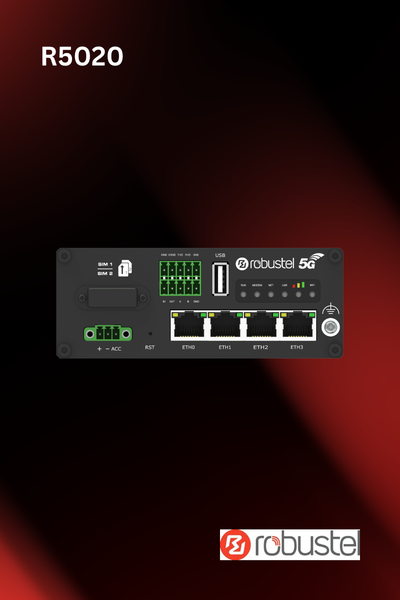
Robustel industrial routers, such as the R3000 or R5020, feature autonomous dual SIM failover. If the main network drops, it automatically flips to the backup in about 10 to 30 seconds acting as an active-passive or active-active link management system that monitors connection health continuously.

The technical implementation and logic behind this includes:
Multi-Layer Health Checks: Standard routers only check if the cellular signal is present. Robustel routers perform ICMP Keepalive checks and LCP Echo requests. The router pings a specific destination (like a private VPN headend or a public DNS) every 30 seconds.
Automatic Trigger: If the primary network (e.g., stc in Riyadh) fails three consecutive pings, the router switches to the secondary SIM (e.g., Mobily) within 10–30 seconds.
Session Persistence: The router utilizes smart routing tables to ensure that TCP session persistence is maintained where possible, minimizing the re-handshake time for SCADA master stations.
Smart Failback: To prevent link flapping where a router constantly switches between two unstable networks, Robustel uses a “Stable Period” timer. The router will only return to the primary network after it has been verified as stable for a set duration like 15–30 minutes.
Measured Benefit: Uptime improves from a standard 99.5% to 99.95%, reducing annual downtime from nearly 44 hours to just over 4 hours.
To see the results in action, check our case study where a UAE-based system integrator managing 200 SCADA sites for ADNOC reported that after Amplicon deployed Robustel dual SIM routers, their unplanned downtime incidents dropped from 18 per month to fewer than 2 per month which is a 90% reduction.
Problem 2: Security Vulnerabilities & The VPN/Firewall Solution
Industrial OT networks in the Middle East face an escalating threat landscape. The 2019 attacks on regional energy infrastructure proved that connectivity without security is a liability. Consequently, frameworks like the SAMA/CITC cybersecurity framework in KSA and NESA controls in the UAE have made robust encryption a mandatory requirement for any vendor or system integrator.
Beyond operational shutdowns, a security incident can result in financial losses of $1M–$10M+ per incident, heavy regulatory fines, and permanent reputational damage with national entities.
Exposed OT Infrastructure & Protocol Weaknesses
Many legacy SCADA systems across the GCC were designed for air-gapped isolation that no longer exists in a connected world. System integrators frequently encounter four primary vulnerabilities:
Unencrypted SCADA Communications: Modbus TCP traffic is often sent in cleartext over public cellular networks. This exposes the system to Man-in-the-Middle (MitM) attacks where commands can be intercepted or forged.
Lack of Network Segmentation: Often, OT and IT networks exist on the same flat network. A single compromised office laptop can give an attacker direct access to a PLC controlling a high-pressure gas line.
Weak or Default Credentials: Routers and SCADA systems are frequently deployed with factory-default passwords, and manual password rotation policies are rarely enforced across thousands of remote sites.
Insecure Remote Access: Engineers often VPN directly into the SCADA network without Multi-Factor Authentication (MFA) or role-based access controls, providing a broad “skeleton key” to the entire infrastructure.
Regional Regulatory Landscape
To combat these threats, Middle East authorities have established rigorous standards like:
Saudi Arabia: CITC Cybersecurity Framework and strict Saudi Aramco vendor requirements.
UAE: NESA controls and ADNOC OT Security Standards.
Utilities: DEWA (Dubai) and other GCC utility providers have specific infrastructure protection requirements that must be met before a project is commissioned.
The Solution: Built-In VPN & Stateful Firewall in the UAE
Robustel routers act as a security gateway, shielding the sensitive OT layer from the public internet. They come with enterprise-grade security capabilities pre-configured to meet Saudi Aramco, ADNOC, and NESA requirements. Here’s how they help:
1. VPN Tunnels (Encrypted Communications)
All traffic between field sites and central operations is encrypted via IPsec VPN with AES-256 encryption, terminating at a VPN concentrator hosted in Dubai Internet City, Riyadh, or a private cloud environment.
A 500-site GCC deployment routes all Modbus and OPC-UA traffic through these encrypted tunnels, eliminating cleartext OT traffic over cellular entirely.
2. Stateful Firewall & Network Protection
The built-in stateful firewall operates on a default deny-all inbound policy, with explicit allowlisting only for required SCADA ports such as port 502 for Modbus and port 4840 for OPC-UA.
PLus, geo-blocking restricts traffic from non-GCC IP ranges. Time-based access policies limit remote engineer connectivity to defined business hours. Source IP whitelisting ensures that only the authorised HQ concentrator can initiate connections to PLCs.
3. VLAN Segmentation (Network Isolation)
Integrators can partition the router’s ports into distinct virtual networks:
- VLAN 10: SCADA/PLCs (Strictly whitelisted).
- VLAN 20: IP Cameras & IoT sensors (Limited access).
- VLAN 30: IT Devices/Guest Wi-Fi (Completely isolated from the PLC layer).
4. Template-Based Deployment
For large deployments, a security engineer creates a master configuration template with all VPN credentials, firewall rules, and VLAN assignments pre-loaded. Every router ships with an identical, audited security configuration and is secure from the first minute of operation with no on-site configuration required.
Across 500+ GCC sites deployed using this approach, zero breaches have been reported, with a 100% pass rate on Saudi Aramco, ADNOC, and NESA security audits.
Problem 3: Complex Integration & The Protocol Solution
Middle East industrial projects are rarely greenfield. They are a mix of multi-generational technology like Siemens S7-300s from the 2000s, modern Rockwell EtherNet/IP controllers, and Modbus-based power meters. Getting them to communicate reliably takes weeks of custom development and testing.
Integration Nightmares in Heterogeneous Environments
An industrial project in the Middle East involves connecting dozens of different devices like PLCs from Siemens or Allen-Bradley, SCADA systems from Schneider or ABB, and meters from various vendors, each speaking different languages. Getting them to communicate reliably typically takes weeks of custom development and testing.
Protocol fragmentation examples include:
PLC Communication: Siemens uses the S7 protocol, Allen-Bradley (Rockwell) relies on EtherNet/IP, and Modicon uses Modbus TCP/RTU.
SCADA Integration: Systems like Wonderware often require OPC-UA/DA, Ignition utilizes MQTT + Modbus, and ABB platforms frequently use DNP3 or IEC 104.
Utility Devices: Smart meters use IEC 62056-21 (DLMS/COSEM), while water meters might output M-Bus or Modbus RTU.
Technical Integration Challenges
System integrators face the “Translation Gap” which is converting serial Modbus RTU from field meters to Modbus TCP for the SCADA master, managing mismatched baud rates, and handling complex data format translations (e.g., Modbus to OPC-UA). Without a unified gateway, this results in 2–4 weeks of lost time per project dedicated purely to debugging configuration.
The Solution: Edge Protocol Conversion in the Middle East
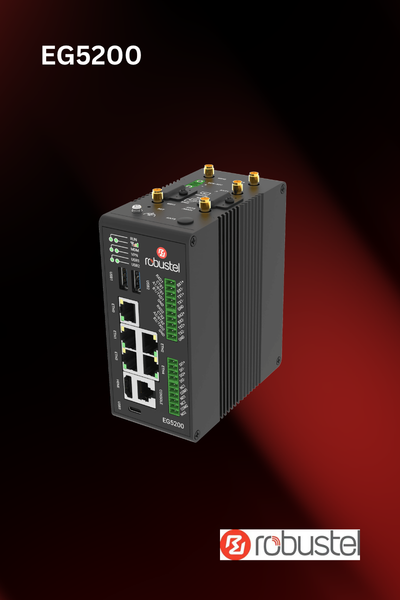
Robustel gateways like the MG460 and EG5200 are designed to eliminate the need for external converters. Supported protocols include:
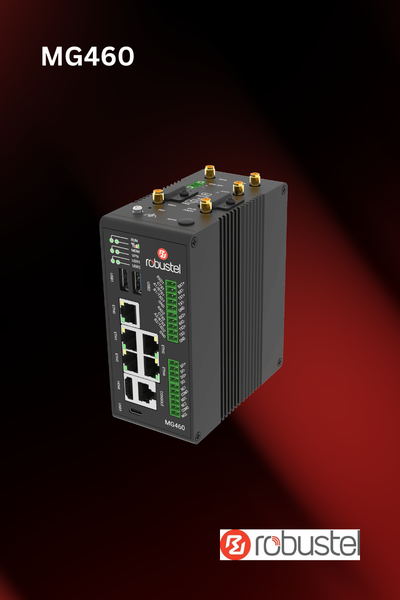
- Modbus (TCP, RTU, ASCII): The most common standard in the Middle East.
- OPC-UA: For secure, modern SCADA integration.
- MQTT: For IoT cloud integration (Azure, AWS).
- DNP3 & IEC 60870-5-104: Standard for utilities and energy sectors.
- EtherNet/IP & BACnet: For manufacturing and building automation.
Example Integration Workflows
Workflow 1: Utility Meter Integration
Smart meters use serial RS485 connections. The Robustel MG460 connects directly, automatically converting Modbus RTU to Modbus TCP. The central SCADA reads this data over Ethernet via a secure cellular link. This results in zero custom code and immediate connectivity.
Workflow 2: Oil & Gas SCAD
PLCs output data via Modbus or DNP3. The Robustel R3000 collects data via multiple serial ports, encrypts it via a VPN tunnel, and delivers it to the central SCADA via DNP3 or IEC 104. Integrators simply enter register maps into a user-friendly web GUI instead of writing translation scripts.
The Configuration Advantage
Robustel provides a web-based GUI for protocol mapping, featuring drag-and-drop register mapping and a Test Mode to verify data flow before site commissioning. For a 100-site deployment, this cuts total integration time from 200 engineer-weeks to less than 200 engineer-hours.
Problem 4: Deployment Delays & Pre-Configuration
A major hurdle for GCC system integrators is the Deployment Timeline. Projects involving 500+ remote sites like smart street lighting or nationwide utility metering often stall due to the sheer logistics of configuration.
The Manual Configuration Trap
Large industrial projects across Saudi Arabia and the UAE routinely take 6–12 months from contract signing to commissioning. Often, these delays aren’t due to hardware lead times, but rather the immense time spent manually configuring and testing hundreds of routers across distributed sites.
The Traditional Deployment Cycle (24+ Weeks):
- Weeks 1–4: Hardware procurement and arrival.
- Weeks 5–8: Manual configuration of each individual router (VPN, Firewall, Protocols).
- Weeks 9–12: Lab testing for each site profile.
- Weeks 13–24: Sequential site-by-site deployment and on-site troubleshooting.
Why It Takes So Long:
- Manual Error Risk: Each router configured by hand is a potential point of failure.
- Specialist Dependency: On-site configuration requires high-cost engineers to travel to remote desert or offshore locations.
- Configuration Drift: Over time, manual changes lead to inconsistent settings across the fleet, making troubleshooting a multi-day nightmare.
- Project Impact: This leads to delayed revenue recognition, penalty clauses for late delivery, and strained client relationships.
The Solution: Zero-Touch Provisioning (ZTP) & RCMS
Robustel routers can be pre-configured and shipped ready for plug-and-play deployment. This shifts the bulk of technical work to a centralized, automated environment, reducing on-site installation time from days to minutes.
How It Works Technically
Pre-Deployment (Configuration Template): A senior engineer creates one master template in the Robustel RCMS portal including all VPN, firewall, and protocol settings. This is validated once in a lab environment.
Mass Configuration & Pre-Staging: The template is applied to the entire batch of routers. Each unit receives its unique ID and security credentials automatically. Devices are verified to auto-connect to the VPN before they ever leave the warehouse.
Plug-and-Play On-Site Installation (30 Minutes):
- Mounting: 15 minutes.
- Power/Antennas: 10 minutes.
- PLC Connection: 5 minutes.
- Activation: Power on to Auto-provisioning starts to VPN connects to Done.
Remote Commissioning: From the HQ, engineers verify data flow and signal health via RCMS. No site visit from senior staff is required.
The result is a reduction from 24 weeks to 5 weeks for a 100-site deployment which is 19 weeks faster. Engineering labour savings reach $150,000–$250,000 per project at typical GCC senior engineer day rates. Travel costs for 100 site visits will be eliminated, saving a further $50,000–$100,000. Earlier project completion accelerates revenue recognition and, where contracts include completion bonuses, directly contributes to earning them.
Take the Riyadh smart city project as a prime example. They needed 200 routers installed across various traffic intersections which is a job that usually takes about six months. By using Robustel’s pre-configuration services, we helped lower that timeline down to just five weeks. That speed helped secure an additional $2M in follow-on contracts.
Conclusion: Transforming Industrial Connectivity Economics
The four problems in this guide carry measurable costs that dwarf the price of addressing them correctly. Dual SIM failover avoids $600,000–$3,600,000 in annual downtime costs. VPN and firewall architecture eliminates breach exposure worth $1M–$10M per incident and ensures compliance with Saudi Aramco, ADNOC, and NESA requirements. Native multi-protocol support saves 50+ man-weeks per 100-site project. Zero-touch provisioning delivers projects 19 weeks faster with $200,000–$350,000 in combined labour and travel savings.
Robustel’s industrial router portfolio addresses all four in a single vendor relationship. Amplicon Middle East is the authorised Robustel distributor for the GCC, with local stock, certified technical support, and project consultation for deployments of any scale across the UAE, Saudi Arabia, Qatar, Kuwait, Bahrain, and Oman.
Ready to eliminate costly downtime and accelerate your next industrial deployment?
Amplicon Middle East’s team of Robustel specialists provides deep technical support, local stock availability, and hands-on configuration assistance. We can conduct a free connectivity assessment and provide detailed ROI projections for your specific project.
Contact us today to schedule your Technical Assessment.
FAQ: SCADA Downtime Cost Middle East
How much does SCADA downtime cost per hour in GCC oil and gas operations?
In GCC oil and gas operations, unplanned SCADA downtime typically costs between $50,000 and $150,000 per hour, including lost production, safety-mandated shutdown costs, and emergency response. Facilities with no carrier redundancy average 12–24 hours of unplanned downtime per year, producing annual costs of $600,000 to $3,600,000.
What is the best industrial router for dual SIM failover in the UAE and Saudi Arabia?
The Robustel R5020 is the most widely deployed solution for SCADA reliability across GCC oil and gas and industrial environments. It combines dual-SIM LTE automatic failover, built-in Modbus TCP/RTU and DNP3 protocol gateway, IPsec and OpenVPN, an operating temperature range of -25°C to +70°C, and RCMS cloud management.
What is zero-touch provisioning and how much deployment time does it save on GCC industrial projects?
Zero-touch provisioning means a router ships to site with its full configuration pre-loaded. When powered on and connected to a SIM, it automatically connects to the network and pulls its operational state from the RCMS management platform meaning no on-site engineering required. For a 100-site GCC deployment, this reduces total project time from approximately 24 weeks to 5 weeks, saving 19 weeks of project schedule and $200,000–$350,000 in engineering and travel costs.
Which industrial protocols do Robustel routers support natively?
Robustel industrial routers and gateways support Modbus RTU, Modbus TCP, DNP3, IEC 60870-5-104, OPC-UA, MQTT, EtherNet/IP, BACnet, and serial-to-IP conversion for RS232/RS485 legacy devices covering the complete range of protocols deployed across GCC oil and gas, utility, smart city, and manufacturing infrastructure without requiring external protocol converter hardware.


